Cairo is a captivating blend of ancient history and vibrant culture. The world‑renowned Egyptian Museum showcases priceless treasures of the pharaohs, while the bustling Khan el‑Khalili market immerses visitors in the sights, sounds, and aromas of traditional Egyptian life. Overlooking the city, the majestic Muhammad Ali Mosque offers stunning architecture and panoramic views. Adding to Cairo’s unique charm is the sight of camel carts sharing the busy streets with modern vehicles, sometimes slowing traffic and vividly reminding you how tightly the city’s past and present are woven together.
Egyptian Museum highlights
Inside the Egyptian Museum, a few pieces stayed with me long after we left—each a small window into how the ancient Egyptians thought about power and the afterlife.
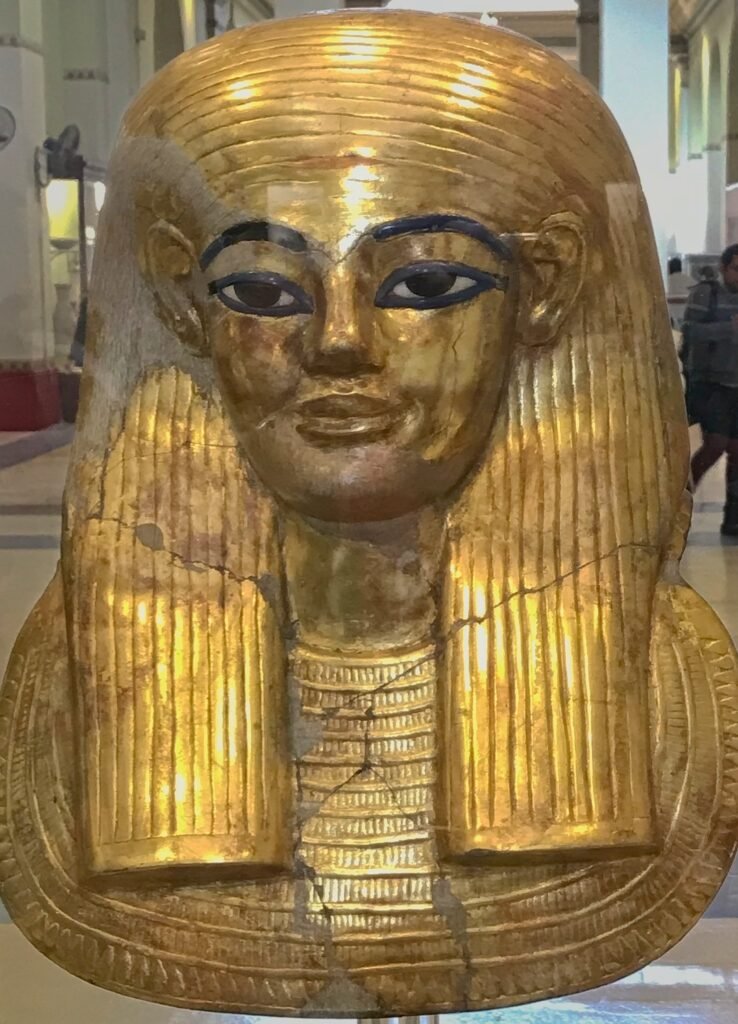
Gilded mummy mask of Yuya, a powerful courtier of the 18th Dynasty (around 1390 BCE), whose remarkably preserved tomb was discovered in the Valley of the Kings
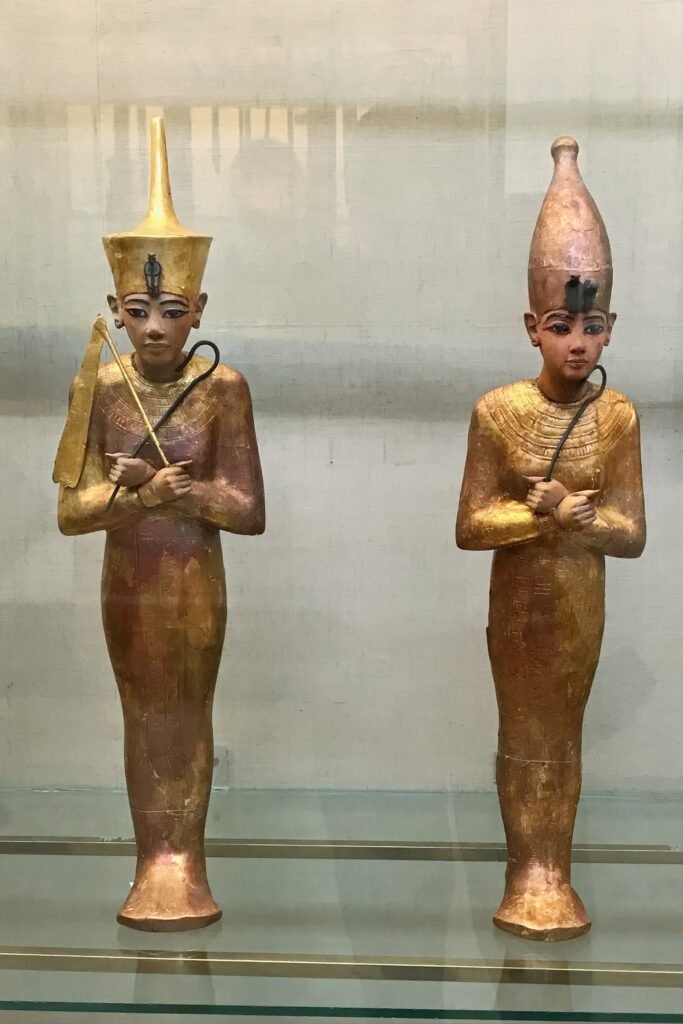
Gilded wooden funerary statues of King Tutankhamun from his tomb in the Valley of the Kings. The two different hats represent the northern and southern regions of ancient Egypt.
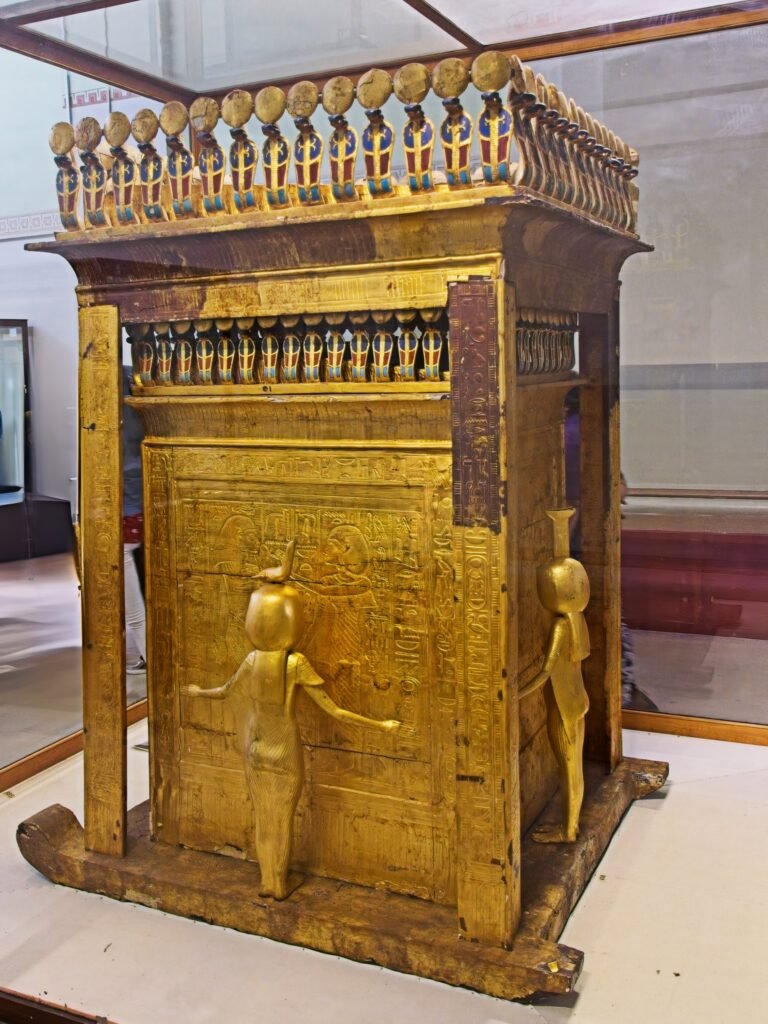
Gilded wooden canopic shrine from the tomb of Tutankhamun, which once protected the alabaster chest containing the jars that held his mummified internal organs for the afterlife.
Khan el-Khalili Bazaar
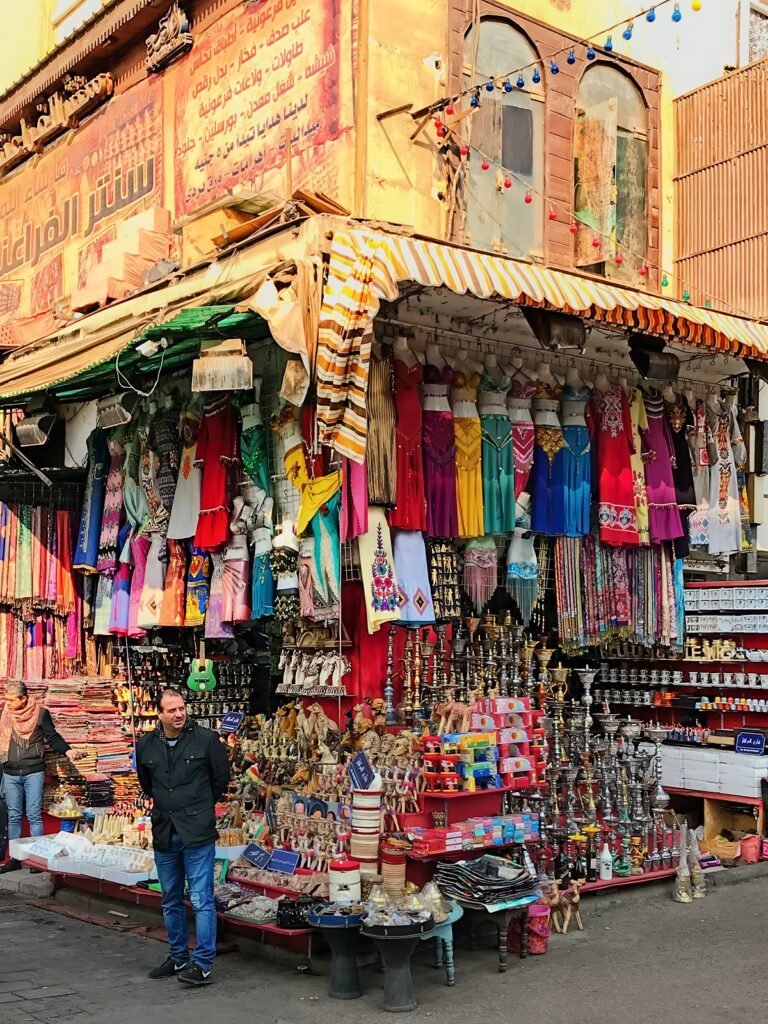
A Khan el‑Khalili shop overflowing with belly‑dancing outfits, historic‑style figurines, hookahs, and colorful souvenirs, capturing the lively chaos of Cairo’s most famous bazaar.
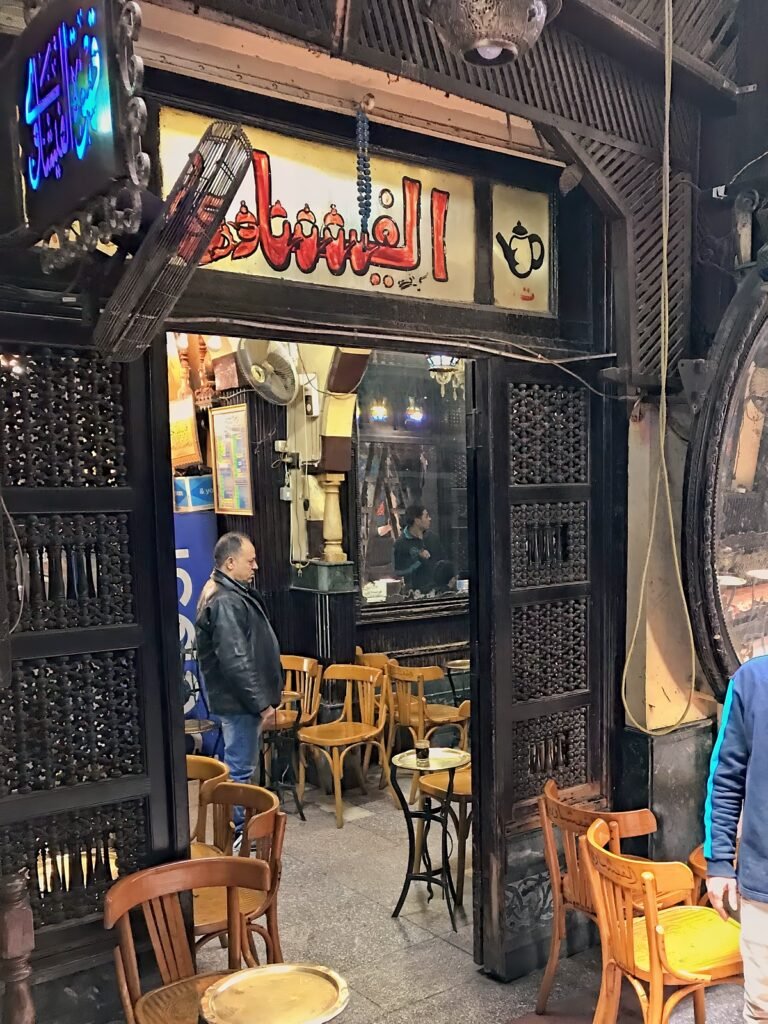
El Fishawy Café in Khan el‑Khalili, founded in 1710 and considered one of the oldest and most iconic traditional cafés in the Middle East, where locals and visitors linger over mint tea and shisha.
Cosmic Symbols and Wall art
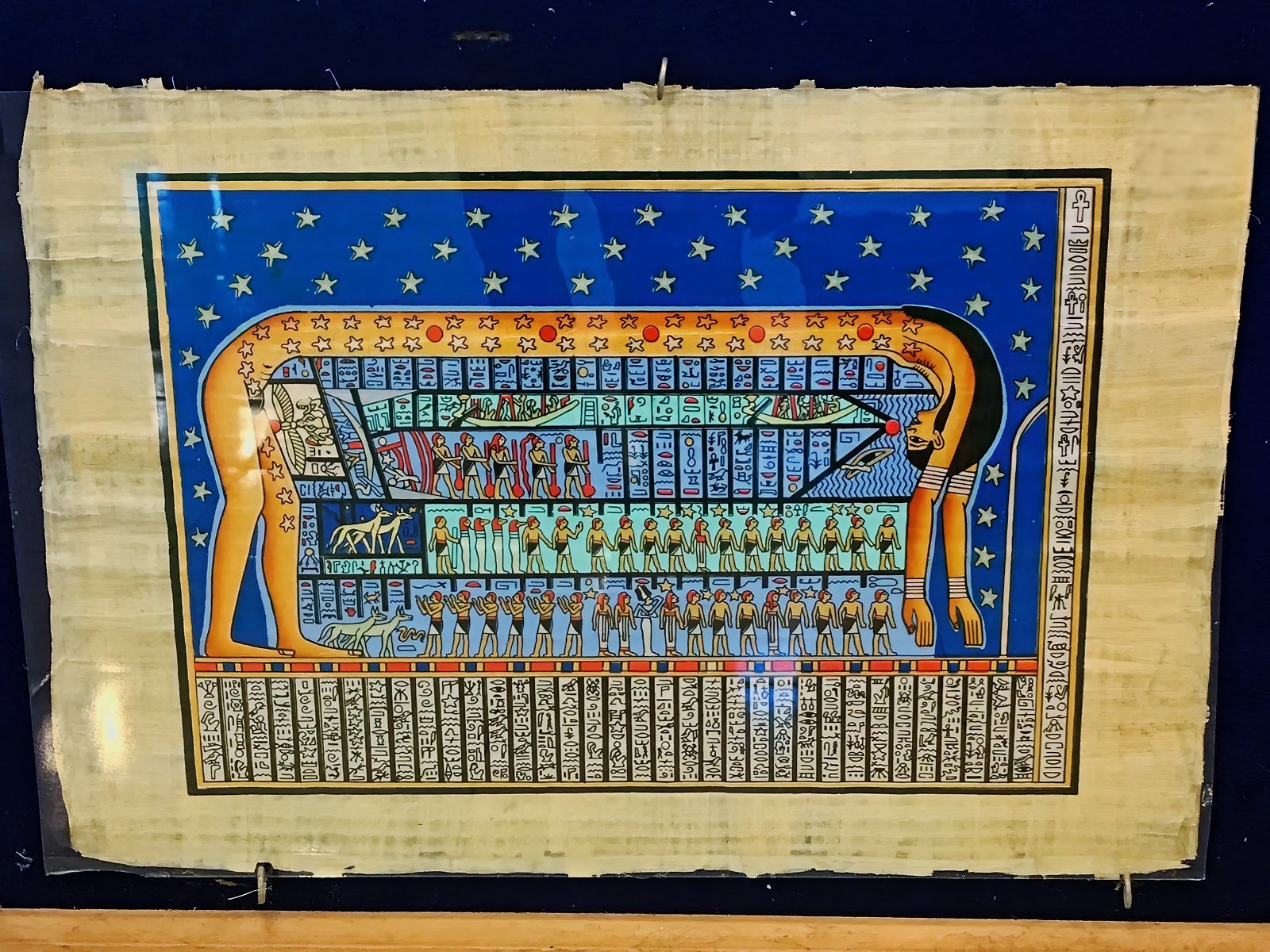
A wall hanging depicting the ancient Egyptian cosmic model: the sky goddess arches overhead, swallowing the sun at sunset and giving birth to it again at sunrise, symbolizing death and rebirth in an endless cycle.
Muhammad Ali Mosque
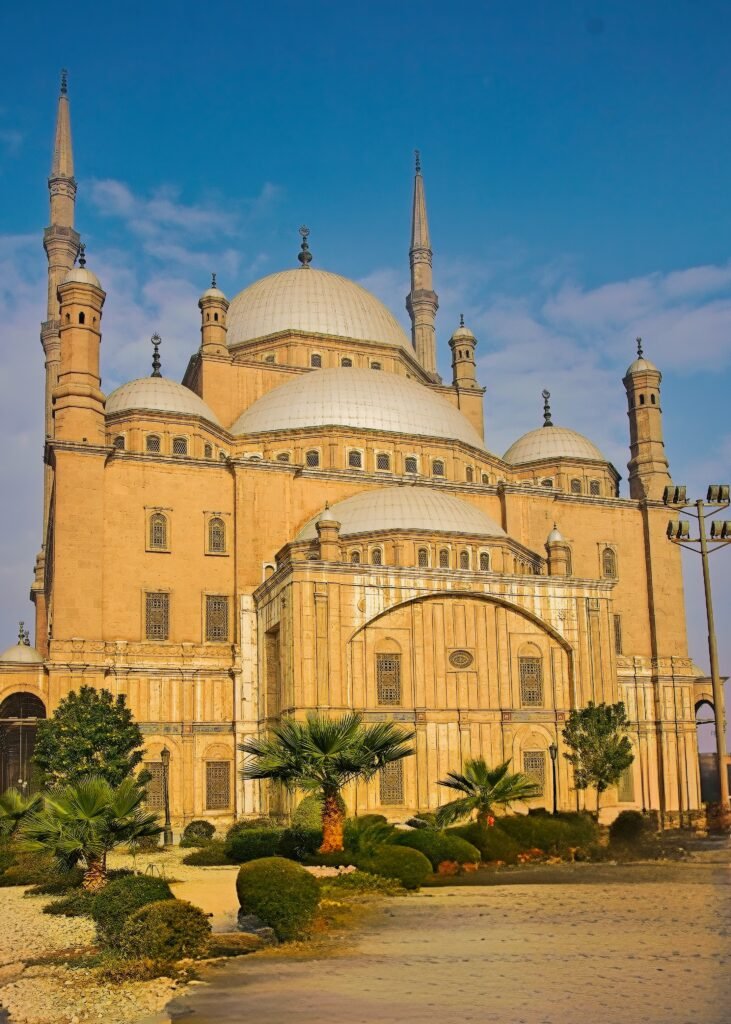
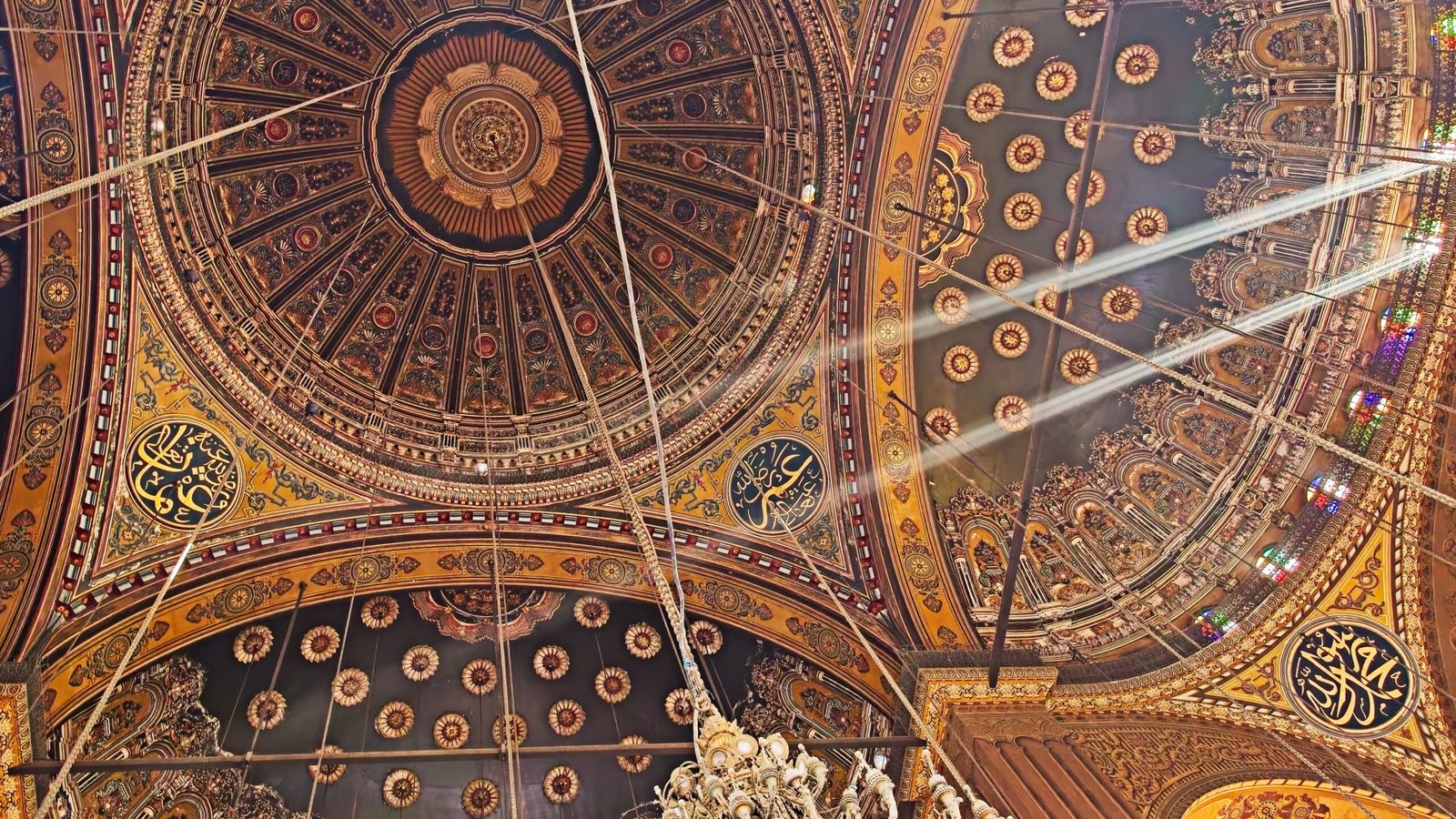
The Muhammad Ali Mosque in Cairo’s Citadel, whose domes and minarets immediately reminded me of Istanbul’s Blue Mosque and Suleymaniye Mosque. Built between 1830 and 1848, when Egypt was officially part of the Ottoman Empire, it was deliberately modeled on the great imperial mosques of Istanbul.The richly decorated ceiling inside the prayer hall of the Muhammad Ali Mosque, where intricate patterns and hanging lamps draw your eyes upward into a calm, symmetrical world above the busy city.
A Taste of Everyday Life
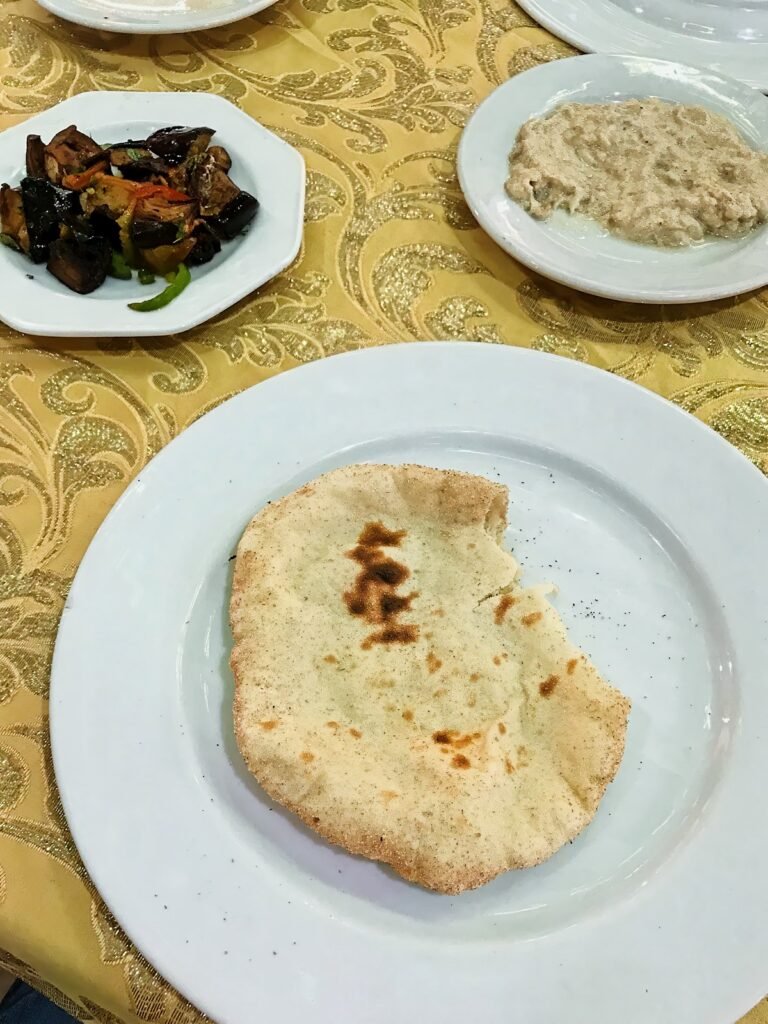
A brief glimpse into everyday life: a woman deftly shaping and baking traditional Egyptian bread in a restaurant, turning simple dough into warm, fragrant rounds in just moments.Freshly baked Egyptian bread served with smoky eggplant dip and creamy hummus. After hours of artifacts, this simple and delicious appetizer grounded the day in the present.
Leaving Cairo, what stayed with me was not just the artifacts or the monuments, but the way they coexist with daily life. Ancient masks and royal shrines sit only a short walk from crowded bazaars, honking traffic, and the smell of fresh bread from a corner restaurant. In this city, history isn’t kept behind glass — it lives in the streets, and you feel it in every sight, sound, and flavor.
If this post helped you plan your trip, we’d love to hear from you in the comments or on Instagram.

Leave a Reply