
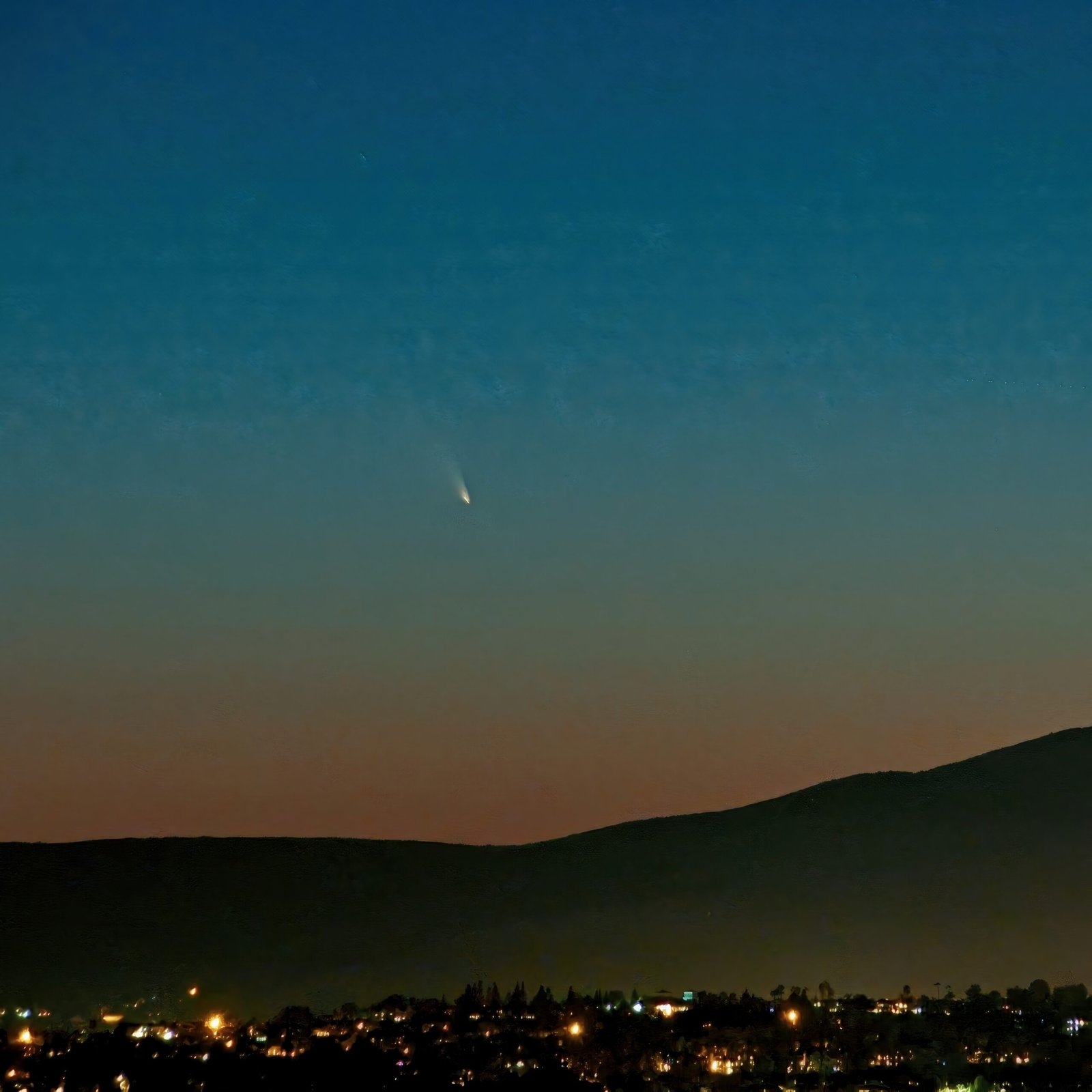
Comet PANSTARRS (C/2011 L4) was discovered in June 2011 by the Pan-STARRS survey telescope on Haleakala, Hawaii, and became a memorable evening-sky visitor in March 2013. Believed to have arrived from the distant Oort Cloud, it traveled inward from the far outer Solar System before passing closest to the Sun on March 10, 2013.
PANSTARRS is a long-period comet rather than a regular human-timescale visitor; its next return is not expected for tens of thousands to hundreds of thousands of years. I photographed it from a roadside pullout on Poway Road in Poway, San Diego County, near its junction with State Route 67. The elevated roadside viewpoint gave me a valuable clear view toward the western sky shortly after sunset—an opportunity to record a visitor unlikely to be seen again in any foreseeable human lifetime.
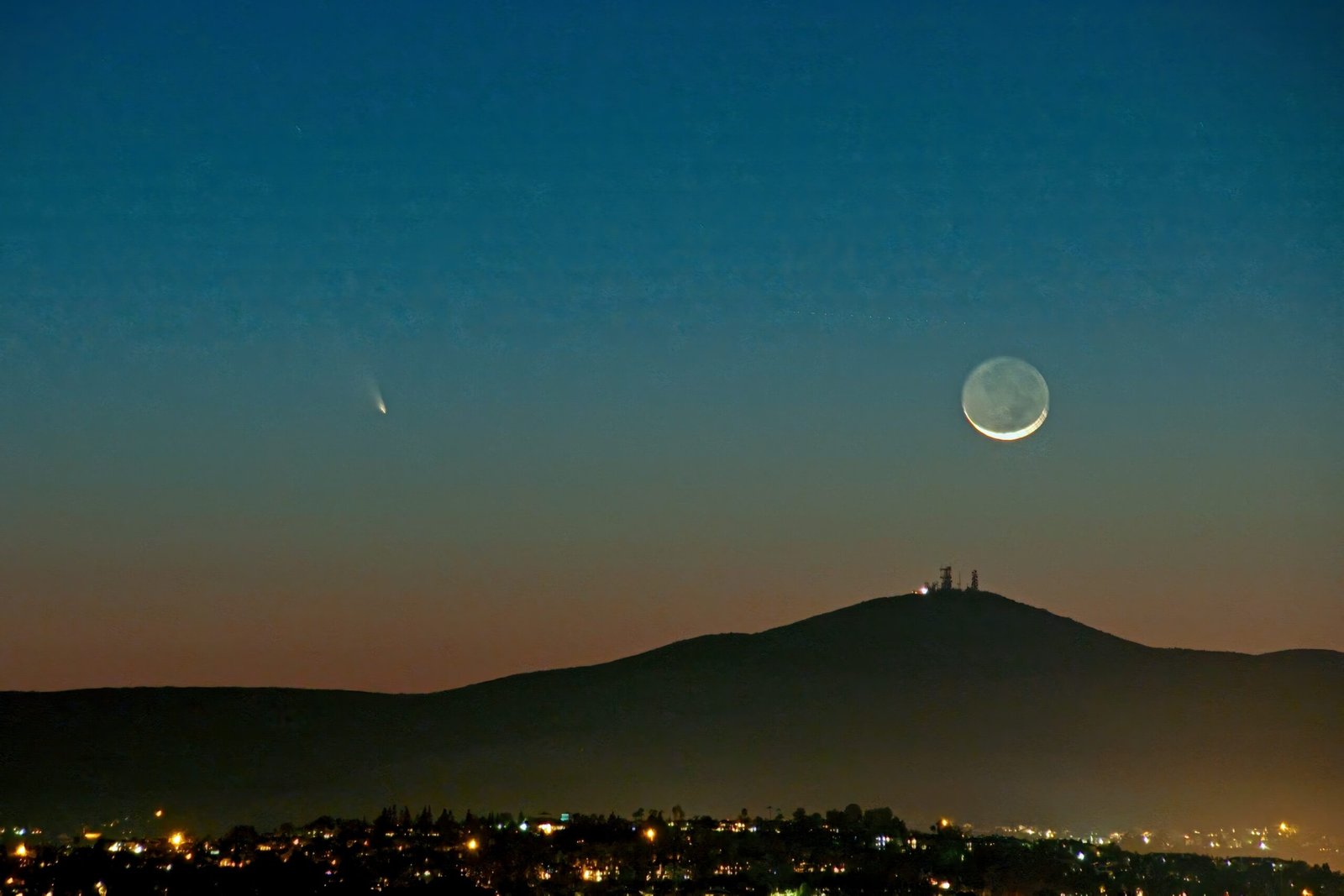
I photographed Comet PANSTARRS from a roadside pullout on Poway Road in Poway, San Diego County. The elevated roadside viewpoint gave me a useful open view toward the western sky soon after sunset, with the silhouette of Black Mountain and the city lights creating a beautiful foreground.
More from the Night: Comet PANSTARRS
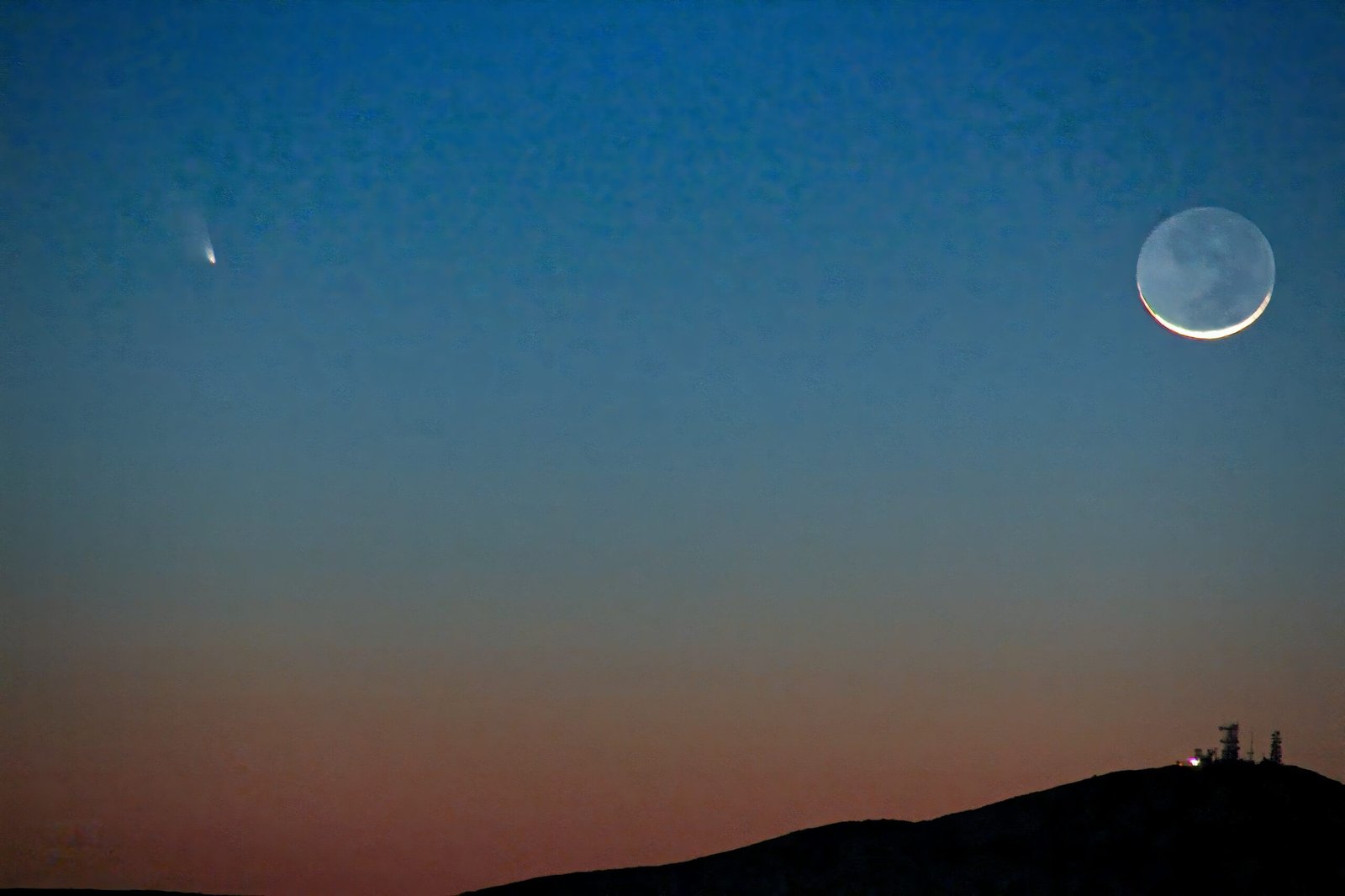
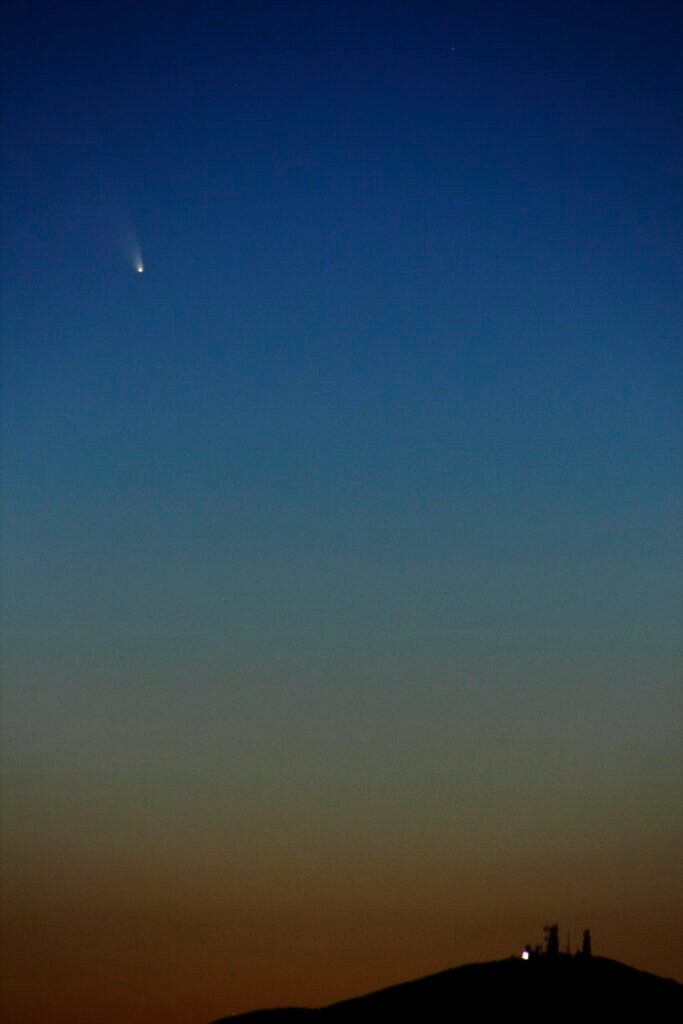
PANSTARRS was getting lower in the bright twilight, so the observation window was brief. Standing beside the road with the comet fading into the evening sky, I was aware that this was not simply another night-sky photograph: it was a record of a visitor unlikely to return during any foreseeable human lifetime.
EXIF & Gear
Shot: 10 sec . f/7.1 ISO 800
Focal Length: 270 mm
Lens: Tamron AF 18-270 Di II Vc
Camera: Canon EOS Rebel T3i
Type: Camera on Tripod
Date: March 13, 2013
Location: Poway, San Diego
Leave a Reply