
Saturn is one of the most beautiful yet demanding planets to photograph from Earth. Its distance from us changes continually as Earth and Saturn move in their separate orbits, ranging from roughly 1.2 billion to 1.7 billion kilometers—about 746 million to 1.05 billion miles. Although Saturn is immense, its great distance makes it appear small in a telescope, and atmospheric turbulence can quickly soften its delicate cloud bands, ring divisions, and the changing view of its spectacular rings.
Saturn’s 27-degree axial tilt and 29.5-year orbit mean that, as seen from Earth, the rings slowly shift from a broad, open display to a nearly edge-on line and back again over roughly 14–15 years. Like Jupiter, I photographed Saturn by connecting my Canon EOS Rebel T3i to a Dobsonian telescope. Capturing this distant ringed world requires steady skies, precise focus, careful exposure, and patient processing—especially when trying to preserve both the bright globe and the fine structure of the rings.
More from the Night
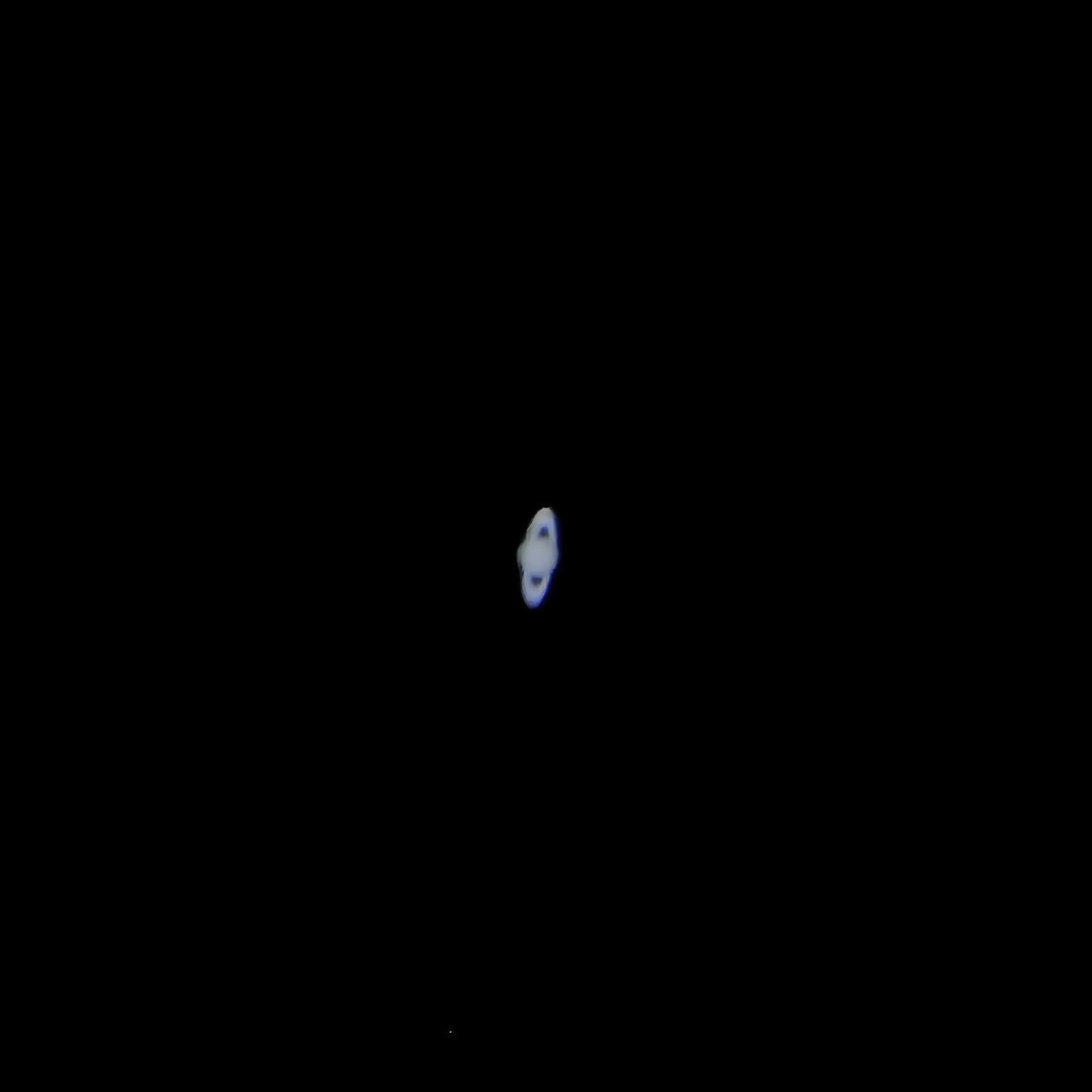
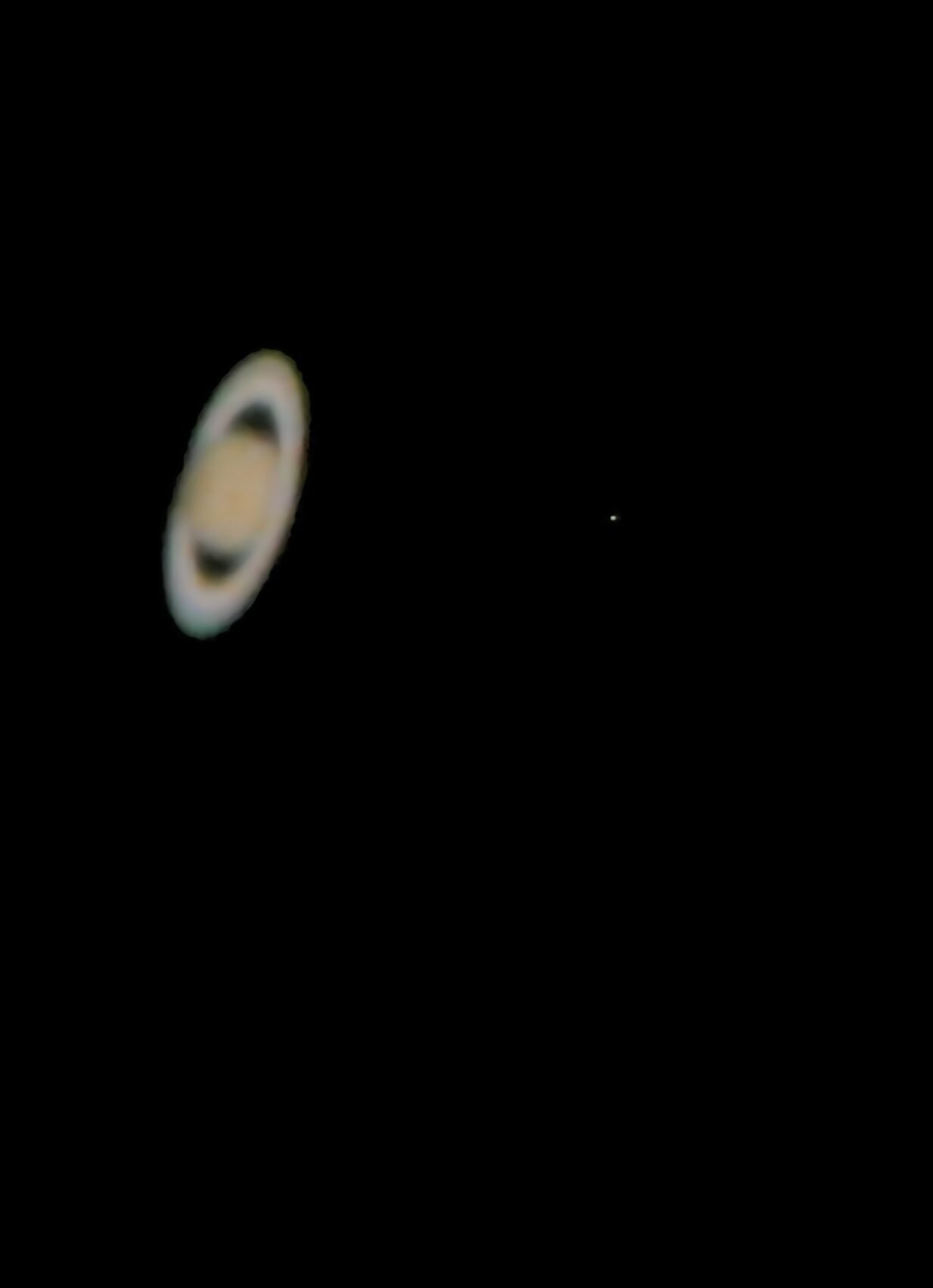
EXIF & Gear
Shot: 1/15 sec . f/4.2 . ISO 100
Focal Length: 1200 mm
Telescope: Orion XT6
Tracking: Manual
Camera: Canon EOS Rebel T3i
Date: January 16, 2005
Location: Westford, MA
Leave a Reply